
Maximizing Long-Term Performance in Water Treatment Media
True protection in water treatment is defined by long-term performance over the full lifecycle of the system.
2 min read
In water treatment, sustainability is often framed in terms of energy efficiency, water savings, or chemical reduction. These are important—but they overlook a critical truth:
The most sustainable system is the one that doesn’t need to be replaced.
Reverse osmosis (RO) systems are widely recognized for their ability to deliver high-quality water. But behind that performance is a component that quietly determines long-term success or failure: the membrane.
And too often, membrane life is shorter than it should be.
Not because the system is flawed—
but because it wasn’t protected.
When an RO membrane fails prematurely, the impact goes far beyond a single replacement:
This cycle repeats more often than many operators expect—especially in challenging water conditions. The result? A system that technically works… but doesn’t endure.
Rethinking Sustainability: Lifecycle Efficiency
Sustainability in water treatment shouldn’t just be about inputs and outputs.
It should be measured across the entire lifecycle of a system.
Lifecycle efficiency means:
This is where pretreatment becomes not just a step—but a strategy.
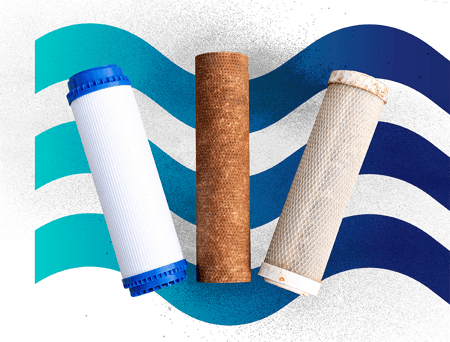
KDF® process media introduces a multi-mechanism approach to pretreatment that directly addresses the root causes of membrane degradation.
By leveraging redox (oxidation-reduction) reactions, KDF helps:
Unlike consumable chemical treatments, KDF works continuously within the system—supporting performance without adding complexity.
RO systems don’t fail overnight.
They degrade gradually—through fouling, scaling, oxidation, and biological buildup.
KDF pretreatment helps interrupt that process.
By stabilizing feed water conditions before they reach the membrane, KDF enables:
This is not just protection—it’s performance preservation.
Less Replacement. Less Waste. Less Disruption.
Every membrane that lasts longer represents:
This is sustainability in practice—not as a claim, but as an outcome. And it starts upstream.
A Smarter Approach to RO System Design
As water challenges become more complex, system design must evolve beyond reactive maintenance.
The question is no longer:
“How do we fix membrane problems when they occur?”
It’s:
“How do we prevent them from happening in the first place?”
Integrating KDF into pretreatment is a proactive step toward that future—one where systems are designed to last, not just perform.
We’ll be sharing more at the WQA Convention & Expo, including insights into how KDF pretreatment supports RO membrane longevity in demanding applications.
Visit us at Booth #369 and don’t miss our spotlight session:
“Why Your RO System Isn’t Lasting as Long as It Should”
Discover how a smarter pretreatment strategy can extend membrane life, reduce disruption, and redefine what sustainability really means in water treatment.
True protection in water treatment is defined by long-term performance over the full lifecycle of the system.

Protection You Can Pass Down Protection isn’t just about solving today’s problem. It’s about safeguarding what comes next.